passage
Psalm 46:1 Explained: Our Refuge and Strength
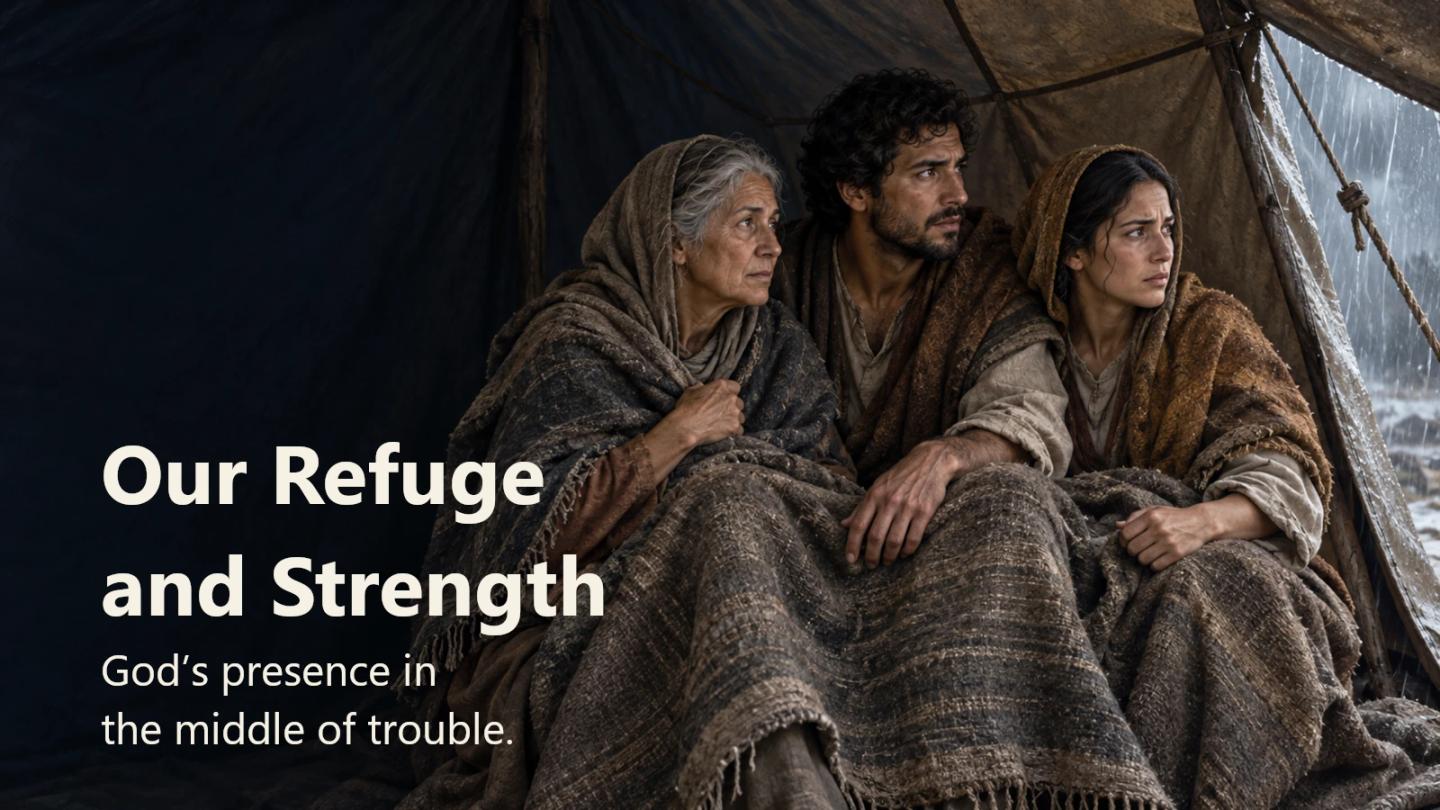
Psalm 46 names God as his people’s refuge, strength, and help in trouble. The whole song grounds communal confidence in God’s presence amid upheaval, not immunity from danger.
Updated October 23, 2026
Passage: Psalm 46:1 (WEBP)
Literary setting: Psalm 46:1–11, a communal song with three movements and repeated God-with-us refrain.
At a glance
Meaning in brief
God is the refuge and strength of his people in trouble. Psalm 46 develops that confession through upheaval, the city of God, and conflict among nations. Its confidence rests on God’s presence and sovereignty. It does not say that every individual crisis will end quickly or that God’s people cannot suffer harm.
The words of Psalm 46:1
God is our refuge and strength, a very present help in trouble.Psalm 46:1 (WEBP)
Read the verse inside the song
The word “our” matters. This is a communal confession, not only private encouragement. The opening movement describes upheaval in the earth, mountains, and waters. The next turns to the city of God and God’s presence there. The final movement names war, God’s works, and his exaltation among the nations. The opening sentence gives the ground of the song’s confidence.
The refrain in verses 7 and 11 returns to the LORD of Armies being with his people and the God of Jacob as their refuge. Reading that refrain alongside verse 1 keeps the focus on who God is and his presence with them. The song does not ground confidence in the strength of their own plans.
The three movements help us read the opening confession:
- Verses1–3: God’s refuge amid upheaval.
- Verses4–7: God’s presence with his city and people.
- Verses8–11: God’s works and exaltation amid conflict.
“God is our refuge”
A refuge is a shelter to which someone can turn in danger. Barnes explains the metaphor in terms of a place of safety and trust. The image names God as the source of security rather than treating a building as sufficient in itself. It is a confession of dependence, not an instruction to ignore the danger outside.
“And strength”
Strength is not merely another word for a hiding place. It names God as the source of support when his people are not sufficient in themselves. Keeping refuge and strength together lets the verse speak both of shelter and of help. Neither word promises that a reader will suddenly possess unlimited physical or emotional capacity.
“A very present help in trouble”
The phrase points to help that can be relied upon. Barnes draws attention to the sense of help that has been found or proved; the USCCB notes emphasize the song’s confidence in divine presence. These emphases can illuminate the promise, but neither establishes when a particular crisis must end. “Present” does not establish an instant response on my timetable.
Notice the setting: help “in trouble.” Trouble is not treated as proof that God has ceased to be a refuge. The opening description is severe, and the later stanzas do not avoid enemies or conflict. The song confesses God’s strength within that reality. It should not be reduced to a prediction that a particular threat cannot touch us.
What the ancient setting can establish
The superscription identifies the sons of Korah and a musical direction. The exact performance instruction is uncertain. Some historical commentators suggest a particular siege as the occasion, but the psalm does not establish one securely. We do not need an invented battle story to understand its confession.
The city imagery is important, but it is not permission to identify a modern nation, a private home, or our preferred plans with Zion. The river imagery is also not a verified map of a literal river through Jerusalem. Christian readers can apply the poem’s call to trust God while clearly distinguishing that application from its ancient communal setting.
Do not detach “be still” from the rest
Psalm 46:10 belongs to the movement about conflict and God’s exaltation. It should not be reduced to a generic instruction for quiet meditation. The poem directs attention to God’s sovereignty, including his exaltation among the nations, rather than presenting silence as a technique that produces whatever answer we need.
A responsible application
A Christian application is to turn to God in real trouble without pretending to be self-sufficient. That can sit alongside prudent protective action and appropriate help. The verse does not prescribe an individual medical, legal, or safety decision. Trust is not the denial that care or protection may be needed.
The shepherd and valley imagery in Psalm 23 Explained offers a related but different picture of God’s presence. If your question is why a particular suffering happened, Why Does God Allow Suffering? addresses that wider question without claiming one cause for every case. Psalm 46’s focus remains refuge and strength amid upheaval.