passage
Matthew 11:28–30 Explained: Rest for the Weary
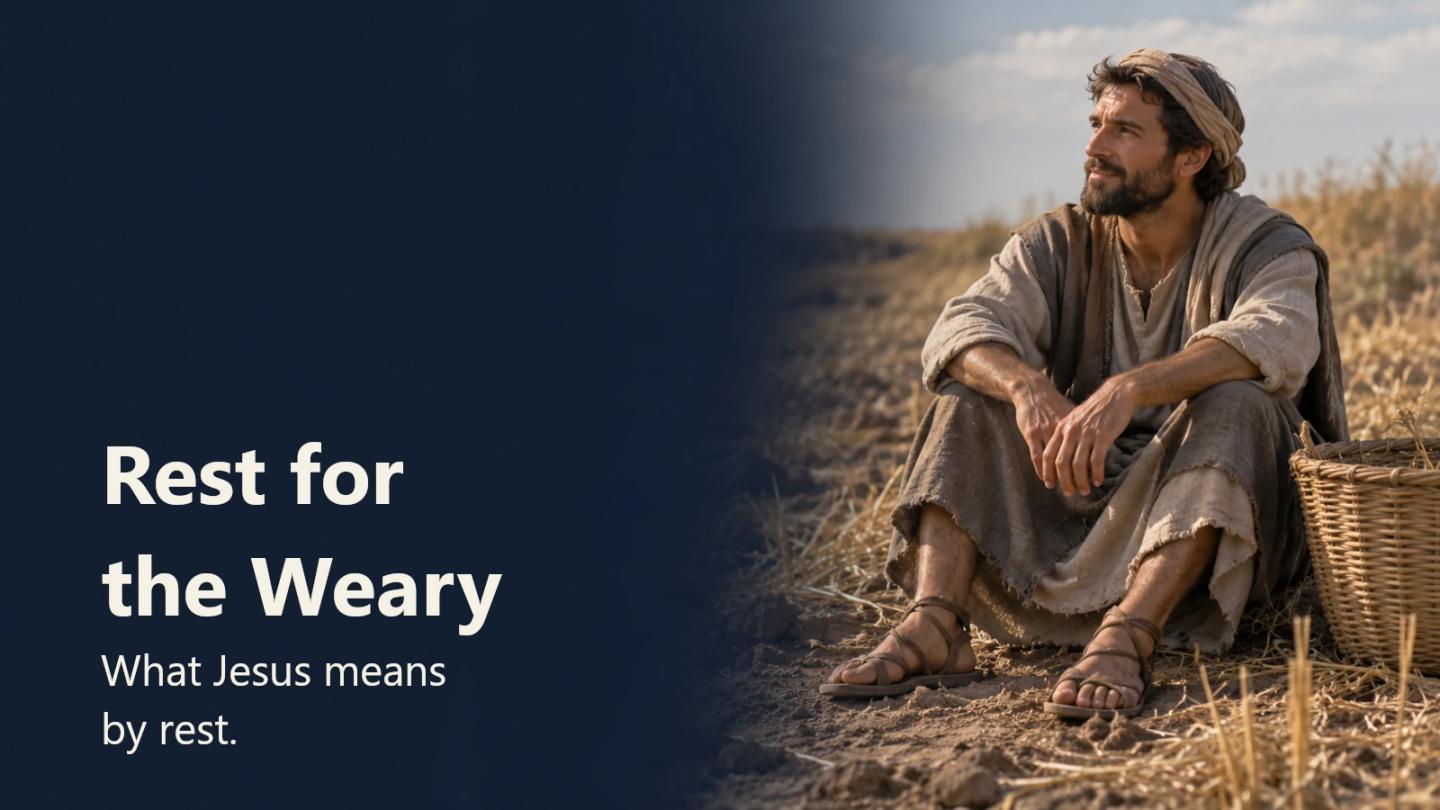
Jesus invites burdened people to himself, to take his yoke and learn from him. His gentle discipleship offers rest; the promise is not an effortless life or immediate relief from every burden.
Updated October 29, 2026
Passage: Matthew 11:28–30 (WEBP)
Literary setting: Matthew 11:2–30; focus 11:25–30, revelation and the invitation to gentle discipleship.
At a glance
Meaning in brief
Jesus calls people who labor and carry heavy burdens to come to him. The invitation includes taking his yoke and learning from him, the gentle and humble teacher. The rest he promises is therefore joined to discipleship, not freedom from all responsibility. It does not guarantee immediate recovery from exhaustion or an effortless life.
The passage
“Come to me, all you who labor and are heavily burdened, and I will give you rest. Take my yoke upon you and learn from me, for I am gentle and humble in heart; and you will find rest for your souls. For my yoke is easy, and my burden is light.”Matthew 11:28–30 (WEBP)
Why the preceding words matter
Matthew 11 includes questions about Jesus, differing responses to him, and judgment on cities that did not repent. Immediately before the invitation, Jesus speaks about the Father and the Son and the revelation the Son gives. “Come to me” is not an isolated wellness saying. It is an invitation to the person whose identity and authority the surrounding words disclose.
“Come to me”
The invitation is directed to those who labor and are heavily burdened. The USCCB notes emphasize burdens imposed through scribal interpretation; Benson and Matthew Henry also discuss spiritual weariness, guilt, and broader burdens. The invitation is wide, but its context should guide how we explain it. We need not choose one kind of weariness and pretend it excludes every other application.
Jesus does not offer rest by directing the reader away from himself toward a special technique. He is the giver named in the promise. Bringing burdens to him in trust is a responsible application; demanding a certain feeling by a certain time is not what the words establish.
“Take my yoke upon you”
A yoke here is an image of discipleship under a teacher’s authority. Jesus offers his yoke rather than the absence of any yoke. This matters when the passage is used to suggest that following him involves no demands. Rest and learning from him belong together.
The contrast with oppressive religious burdens must not become a caricature that Judaism was uniformly graceless. Nor does this passage say that the Old Testament has no value. The focus is Jesus’ invitation and the character of his teaching. A popular story about a custom-fitted double yoke, with Jesus carrying one side, is not needed and has not been established by the sources used here.
“Learn from me”
Learning is part of the promised rest. The passage does not tell a burdened person merely to stop caring about how to live. It calls that person into relationship with Jesus as teacher. Obedience to his word is part of this context, not something added in competition with his kindness.
“Gentle and humble in heart”
Jesus describes his own character as gentle and humble. Those words shape how the reader should understand his authority. His invitation must not be used to justify controlling or humiliating people who are already burdened. The article’s practical application should preserve the character of the teacher, rather than make the passage another demand to perform an ideal emotional state.
“My yoke is easy, and my burden is light”
Benson explains the goodness or graciousness of the yoke. The English word “easy” should not be treated as a promise that the whole of discipleship requires no effort. Read the statement alongside the teacher’s gentle character and the rest he gives. It does not erase the call to come, take, and learn.
What kind of rest is promised?
The words “rest for your souls” point beyond sleep or restored productivity. The researched commentaries connect the promise with life under Jesus’ teaching and with his saving care. That supports a spiritual and discipleship-centered explanation while allowing exhausted people to hear the invitation. It does not turn the verse into medical advice or a promise that every physical burden vanishes.
A responsible response
Read all three verses together. A responsible application is to bring your burdens to Christ, learn from what he teaches, and resist the idea that continued fatigue must prove defective faith. Appropriate practical support or qualified care need not be treated as a rejection of the invitation. This is pastoral application, not a treatment plan.
For Jesus’ teaching about worry over daily needs, see Matthew 6:25–34 Explained. For prayer and peace in Paul’s particular setting, see Philippians 4:6–7 Explained. This passage’s focus is rest through coming to and learning from Jesus, not another list of anxiety verses.